
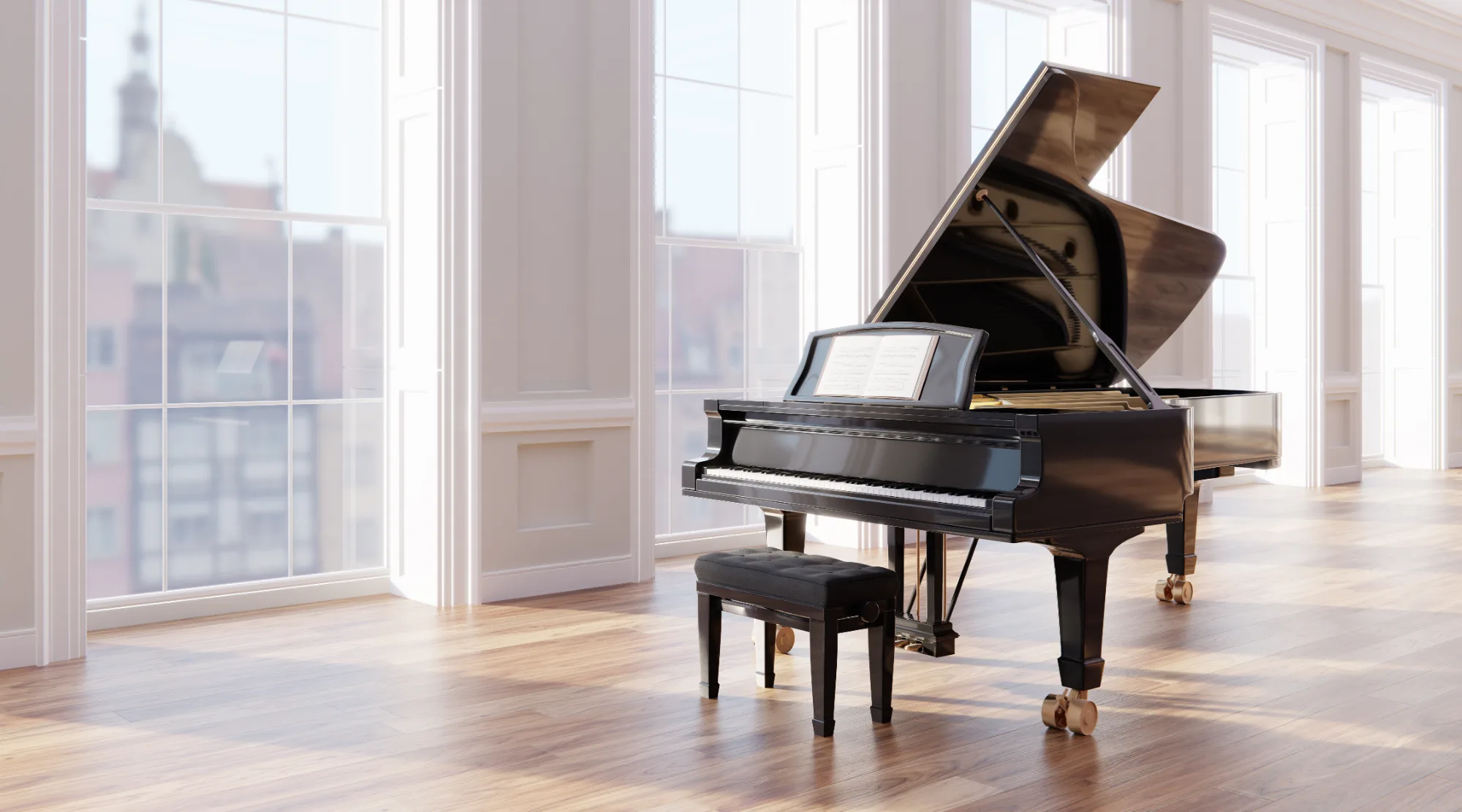
A piano is heavy, and all of that weight rests on a few small casters or, for a grand, three legs. Rolled carelessly, it can dent timber, crack tiles and leave tracks across carpet. Protecting floors is part of every move we do, and it starts before the piano is touched.
Why pianos damage floors
Old piano casters are often brass or hard rubber that has stiffened with age, and many barely roll at all. Push a 250 kg upright on casters like that and they skid, gouge or dig in. Grand piano legs put even more weight on just three points.
How we protect your floors
- The piano comes off its own casters and onto a padded trolley, so it never rolls on its original wheels
- Grands are lowered onto a padded skid board with the legs removed, so the legs never travel across the floor
- Floor protection goes down along the route where it is needed, especially over polished timber, tiles and stone
- The piano is lifted, never dragged, over thresholds, rugs and changes in floor height
- At placement the piano is lowered gently, onto caster cups if you have them
One customer wrote that Gabriel and his team were very careful with the piano during the move as well as the floor surfaces in both locations. That is the standard we hold ourselves to: the floors you started with should be the floors you finish with.
What you can do before moving day
- Clear rugs, mats and furniture from the route so we can see the floor
- Tell us about floors that need special care, such as freshly polished boards or soft timber
- Have caster cups ready for the piano’s new spot, especially on timber or vinyl
- If a floor is brand new, ask your installer how long it needs before heavy loads go on it
Period homes and heritage floors
Original boards, tessellated tiles and old thresholds need extra care. If you are in a period home in a suburb like Kew or Princes Hill, mention it when you book and we will plan the route around the floors. Our piano moving equipment guide shows the trolleys and boards we use.
Caster cups and long term care
Once a piano is in place, caster cups spread its weight and stop it slowly creeping or denting the floor. They are inexpensive and available from piano retailers and tuners. For a grand, ask for cups sized to its casters. See grand piano moving for more on grands.
Questions
Floors and piano moving: FAQs
Will moving a piano damage my timber floors?
Not when it is moved properly. The piano goes on a padded trolley or skid board and the floors are protected along the route.
Should my piano sit on caster cups?
Yes, especially on timber or vinyl. They spread the weight and protect the floor over time.
Do you move pianos across tiles and stone?
Yes. We protect them along the route and never roll a piano on its original casters.
Ready when you are