
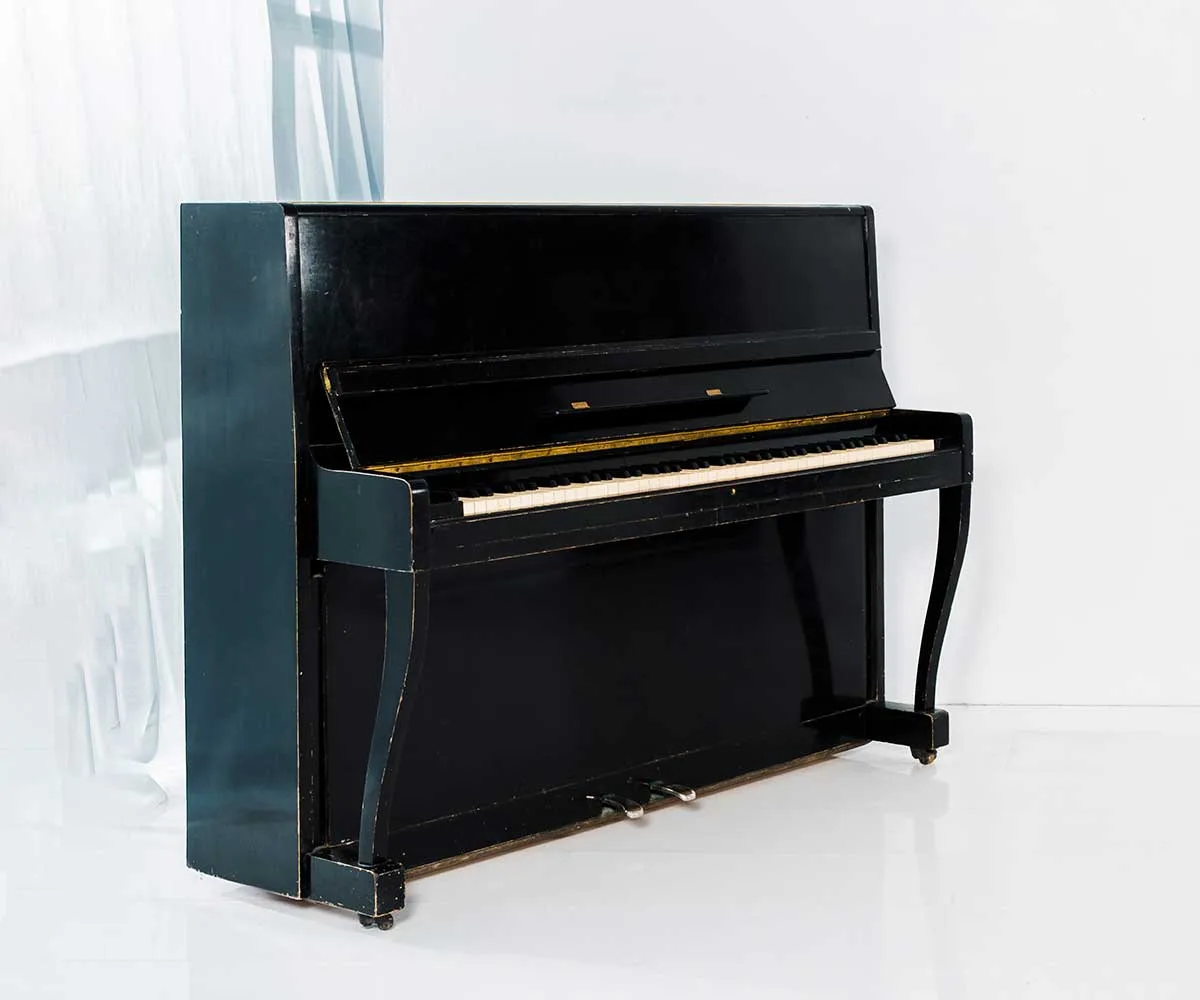
It is one of the first questions we hear on the phone, usually followed by “can’t a few of us just carry it?” The honest answer is that pianos are far heavier than they look, and most of that weight sits where you cannot see it. Here is what different pianos weigh, from people who lift them for a living.
Piano weights at a glance
- Small uprights and spinets: around 150 to 200 kg
- Standard family uprights: around 200 to 300 kg
- Large and older uprights, such as tall German and English uprights: often 250 to 350 kg
- Pianolas (player pianos): usually 250 to 350 kg, because of the player mechanism inside
- Baby grands: around 225 to 320 kg
- Concert grands: around 450 to 550 kg
- Console digital pianos: usually 40 to 90 kg
These are typical ranges, not exact figures. Two uprights that look much the same can differ by 50 kg or more depending on the frame, the case timber and the age of the instrument.
Where the weight comes from
Most of a piano’s weight is its cast iron plate, the harp shaped frame that holds the strings. Together the strings pull with a combined tension of around 18 to 20 tonnes, and the plate is what stops that tension pulling the instrument apart.
Add a solid timber case, a wooden soundboard and more than 200 strings, and you have a lot of mass packed into a compact shape. In an upright, much of that mass sits high and towards the back, which is why an upright can tip if it is tilted carelessly.
Why weight changes how a piano is moved
Weight on its own is manageable. Weight combined with stairs, slopes and narrow turns is where piano moves go wrong. A 250 kg upright going down a flight of steps needs to be controlled from above and below the whole way, on a trolley rated for stairs, with enough people that nobody is taking the load alone.
Our customers notice the difference. One wrote that her extremely heavy German piano had been a struggle for previous movers, and that Gabriel moved it with care and ease. Another had a Yamaha U3 moved over lawn, outdoor stairs and six internal steps and said the crew did a fabulous job. Neither move was easy. Both were planned around the weight.
Can you lay a piano on its back?
Uprights should travel upright. Laying one on its back stresses the case and the action and makes it much harder to control. Grands are the exception: the legs and lyre come off and the piano is laid on its straight side on a padded skid board, which is the safest way to get it through a doorway. Our grand piano moving page explains how that works.
Should you move a piano yourself?
For a short, flat move with no steps, a few strong people sometimes manage. The risks are injuries, damaged floors and a dropped piano, so check whether your insurance covers damage you cause yourself before you try.
If there are stairs, a slope or a grand involved, it is a job for specialists. Our guide to moving a piano up stairs explains why, and piano moving equipment explained shows the gear involved.
Not sure what your piano weighs? Tell us the brand and model, or send a photo, when you ask for a quote and we will work it out.
Questions
Piano weight: FAQs
How much does an upright piano weigh?
Most family uprights weigh around 200 to 300 kg. Older, taller uprights and pianolas can be heavier.
How much does a baby grand piano weigh?
Usually around 225 to 320 kg, depending on its size and maker.
How many people does it take to move a piano?
It depends on the piano and the access. A flat move might need two experienced movers with the right trolley. Stairs, slopes and grands need more.
Ready when you are